

Source: Local Economies (UK)
Author: Stewart Burnett
Date published: 2026-05-28
[original article can be accessed via hyperlink at the end]
Sunderland once served as Nissan’s flagship EV plant, but it’s increasingly relegated to the role of a minor player as cost cuts deepen. By Stewart Burnett
Nissan drivetrain subsidiary Jatco has reportedly shelved its plans to build an e-axle manufacturing facility at the company’s Sunderland plant, cancelling a £48.7m (US$65m) investment that would have produced up to 340,000 integrated e-drivetrains per year. Although not formally confirmed by either Nissan or Jatco, sources have told Nikkei that a collapse in Nissan’s European electric vehicle (EV) sales has removed any credible business case for dedicated local powertrain capacity.
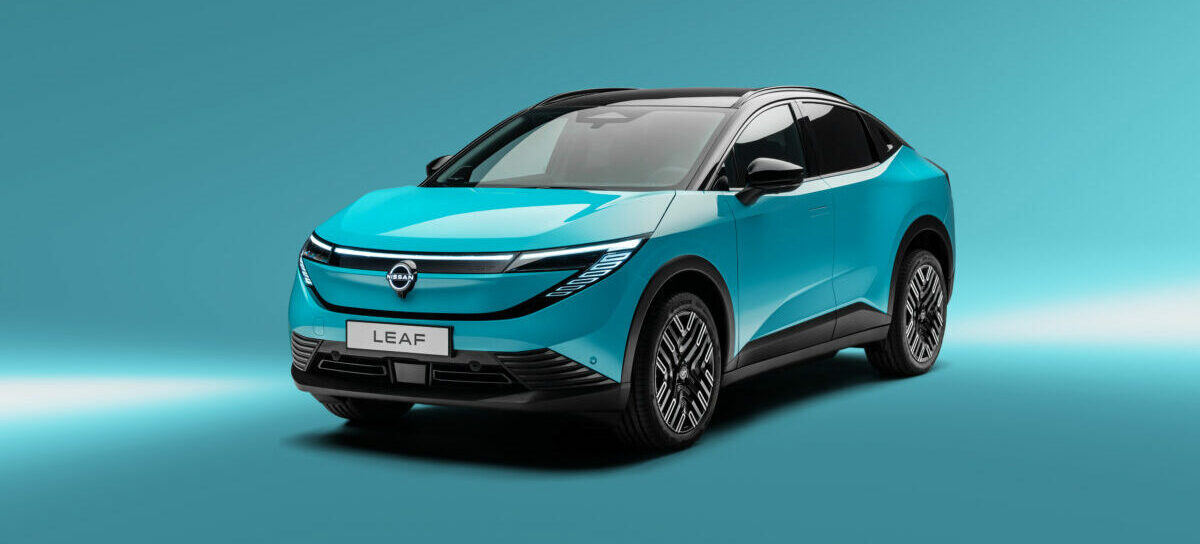
The development comes on the heels of a particularly difficult year for Nissan Leaf sales. Once the world’s first genuinely high-volume EV, the model recorded just 87 units sold across Europe in fiscal 2025 for a staggering 99% decline. The decline can be substantially attributed to transitioning towards a next-generation version of the vehicle, but the development remains symptomatic of a brand that has steadily ceded ground since its early-mover advantage dissipated.
Elsewhere on Nissan’s EV front, Ariya sales fell 44% to 11,507 units in the same period, and the automaker’s European market share declined to 2.2% in 2025 from 3.9% a decade earlier. Without the necessary volumes to run a dedicated powertrain plant at anything approaching meaningful capacity, the investment case has been deemed indefensible by Nissan as it tightens its belt across all global operations.
Nissan’s turnaround plan, dubbed Re:Nissan, has forced the automaker to make a lot of difficult choices. The automaker is aiming to reduce its global vehicle production network from 17 plants down to just ten, while also cutting 15% of its global workforce or some 20,000 people. Sustained weakness in the US and China, the company’s two most strategically critical markets, is generally cited as the reason for the cuts.
A global review of powertrain manufacturing sites is running alongside that plant reduction, with specific restructuring measures for individual facilities expected to be determined by around spring 2027. For Sunderland specifically, core operations remain in place: the plant continues to produce the Qashqai, Juke and third-generation Leaf; a Juke EV for the European market also remains on schedule for 2027. The plant has, however, recently seen its production cut to a single lane amid a wider shedding of 900 jobs in Europe.
E-axle supply to Sunderland will now be sourced from Japan rather than produced on-site, a workable arrangement in the near term but one that removes a substantial tranche of value-added manufacturing from a facility that was supposed to deepen its role in EV production, not prolong its dependence on Japanese component imports.
The news will likely provide little comfort to the UK government, which is currently engaged in a turnaround plan of its own: restore British manufacturing to meaningful volumes. UK vehicle production came in at around 764,000 vehicles in 2025, marking the weakest year on record since the 1950s. The government’s plan to reach one million units annual by the end of 2027 increasingly appears out of reach.
The Rules of Origin requirements under the UK-EU Trade and Cooperation Agreement are also tightening, mandating a rising share of locally sourced content to avoid a 10% tariff on vehicle exports to the EU; sourcing e-axles from Japan rather than Sunderland compounds the compliance challenge for UK-built EVs in their largest export market and signals to other potential investors that local demand may not yet justify the risk of on-shoring production.
The Jatco withdrawal is part of a broader recalibration playing out across European EV supply chains. Automakers and component suppliers that had structured their capital investment plans under the assumption of a steeper and more rapid adoption curve are now reckoning with the prospect of their prior commitments. Charging infrastructure gaps, persistently high sticker prices and a cost-of-living crisis has cumulatively made it difficult for many consumers to take the leap into electrification.
Nissan was among the first of the legacy automakers to make a serious commitment to EVs, launching the pioneering Leaf in 2010. Since then, Sunderland has served as the automaker’s strongest expression of that commitment. Neither the early-mover advantage nor the plant’s long record of productivity has proved sufficient to sustain a supply chain investment in the face of demand that did not arrive at the scale or pace assumed.
View original article at:
https://www.automotiveworld.com/news/nissan-scraps-sunderland-e-axle-plan-as-ev-sales-struggle/