

Source: The Strategist
Author: Naoise McDonagh
Date published: 2026-02-04
[original article can be accessed via hyperlink at the end]

While the government’s Future Made in Australia Act is framed as an economic security initiative, its largest funding commitments are directed toward carbon abatement rather than the preservation of broad-based industrial capability.
This imbalance becomes clear when considering gallium, now listed as a priority mineral for Australia’s critical minerals strategic reserve. Gallium cannot be produced without bauxite refining, yet Australia’s refining sector is under growing strain.
An economic security strategy that is underweight on foundational industries while overweight on downstream or speculative green technologies risks undermining the security it aims to advance.
The Future Made in Australia Act (the Act)—the federal government’s primary policy tool for responding to international economic risk—is set to fund Australia’s new mineral reserve. The selected minerals are crucial for Australia’s and its partners’ defence supply-chain security in the face of Beijing’s persistent weaponisation of control over mineral supply chains. But the list raises a critical point concerning reciprocal linkages between broad-based industrial capacity and niche activities, with implications for how the workstreams, funding and focus of the Act are designed.
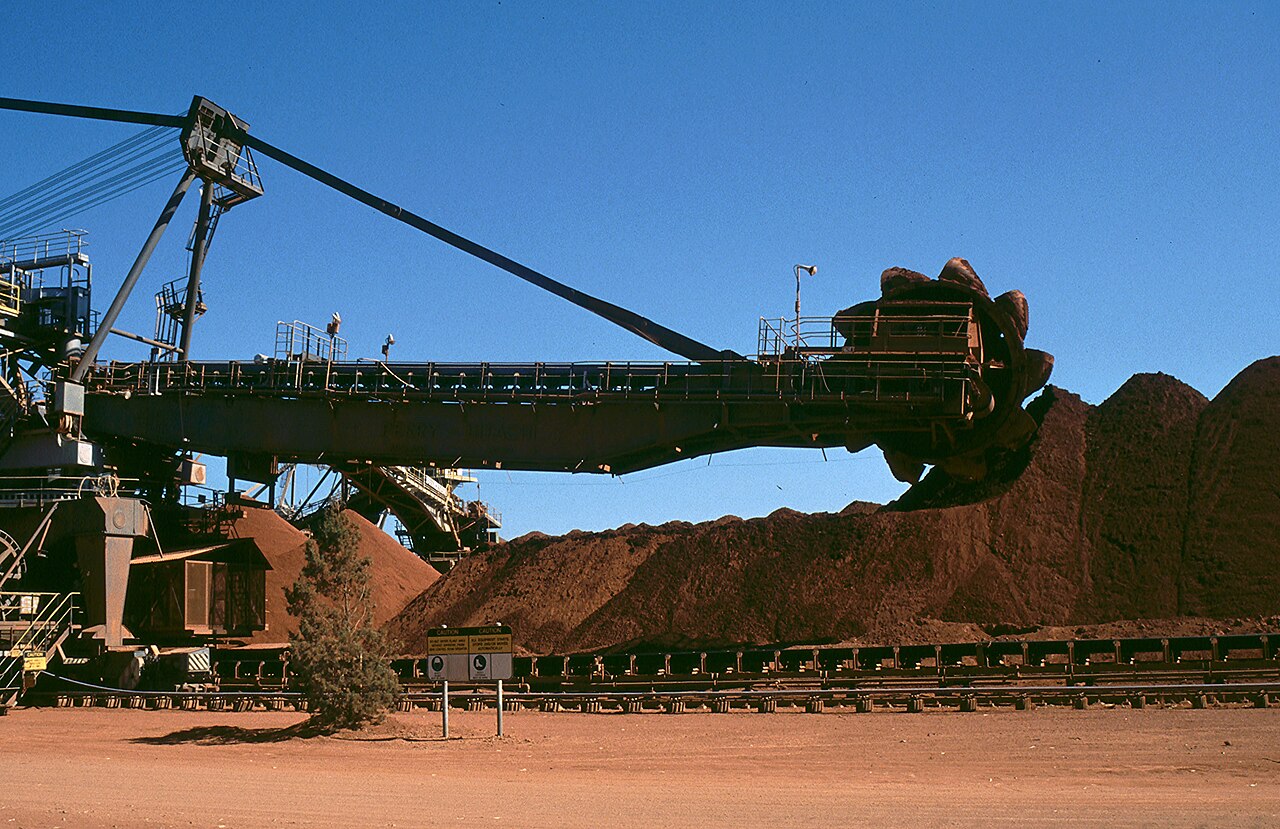
Gallium—a key input for semiconductors, military-grade radars and a raft of other high-tech goods—doesn’t naturally occur as a free element. Rather, it can only be viably sourced through bauxite smelting, during which it accumulates in the caustic liquor by-product. As a result, without a bauxite refining industry, there can be no gallium and no reserve.
Gallium production highlights the relationship between a country’s industrial commons, foundational industrial activities and economic complexity. Foundational industrial activities are the backbone of process knowledge, skilled labour, tacit know-how and ultimately a broad industrial capability set that can pivot towards new adjacent industrial activities. In an era of economic insecurity, the ability to expand Australia’s capability set must be the priority goal of the Act.
An expanding or stable set of foundational industries allows for proliferation and thickening of a host of upstream and downstream ancillary supply chains in a virtuous cycle of interdependent development. When the process goes into reverse, for example during deindustrialisation, your national capability set atrophies, making economic security policy ever more challenging. Australia’s economy has experienced such atrophy in recent decades, leaving the country with one of the lowest ratings for economic complexity globally, ranking 105th out of 145 countries.
The 2024 collapse of Qenos is illustrative. As Australia’s last producer of polyethylene and industrial-use helium, Qenos enabled domestic downstream activities that required engineered plastic, insulation, packaging and specialty polymers. Its closure reduced Australia’s overall capability set and directly led to the closure of chemicals major Indorama’s Sydney complex which, in turn, had lost its only domestic supplier of ethylene. This episode highlighted the compounding atrophy effects of deindustrialisation.
Australia’s metal refining sector is similarly struggling under high energy costs. Traditionally, economists decry efforts at bailing out so-called legacy industries. On a narrow economising level, that is reasonable, but economists’ models assume a benign international market that will always supply goods if the price is paid. That assumption is no longer the baseline for a geoeconomic world facing proliferating economic security risks. Government responses to the closure of foundational industrial activities must involve a revised cost-benefit calculation that internalises national economic security effects.
These insights should inform the resourcing of the Act’s two core work streams: the net zero transformation stream; and the economic security and resilience stream. Currently, the two largest outlays of the Act are the A$6.7 billion Hydrogen Production Tax Incentive in the net zero stream and the A$7 billion Critical Minerals Production Tax Incentive in the economic resilience stream. Green hydrogen is receiving a tax incentive value similar to that which is available to 31 critical minerals, indicating that the Act’s current priority is reducing emissions rather than improving economic security overall.
But the green hydrogen bet was always a gamble for Australia, given the high shipping costs and low export demand. Investors are pulling back from the sector as this reality bites. The federal government should follow suit. The billion-dollar ‘solar sunshot’ plan for building solar panels is equally speculative. Australia’s chances to succeed where Europe’s and the United States’ vast manufacturing capabilities failed to take on China are slim.
The Act over-privileges the green transition workstream at the expense of broader strategic economic resilience. It should re-focus on explicit prioritisation of sectors that deliver maximum economic security, including key defence sector inputs, rather than maximum emissions reduction. Canberra should focus on building out foundational industries where Australia has existing comparative advantages that can be leveraged for development of the country’s industrial capability set.
While Australia’s ability to influence global climate change through policies under the Act is negligible, the government’s ability to influence the nation’s geoeconomic security is vast. The economic resilience workstream should be the Act’s priority stream.
Rebalancing Australia’s industrial policy for the critical-mineral future