
PROSPERITY IN EVERY POSTCODE
“Glenn Athey has written the book the new devolved institutions need before they need it. He is unflinching about forty years of central failure, but braver still in holding a mirror up to those of us who lead locally. If you are building a strategic authority or a new unitary council and you want it to deliver, not just announce, read this now.”
ROB HUNTINGTON, CHIEF EXECUTIVE, ROSSENDALE BOROUGH COUNCIL
Build Economic Development Organisations That Turn Devolution into Growth
Every place has potential. Not every place knows how to unlock it. Devolution is the biggest opportunity local and regional economic development in Britain has had in a generation. It is also on a clock. This book is about what the people doing the work can get right – and how to build the capability, culture and leadership that deliver.
Prosperity In Every Postcode is being released on 28 September. You can get more details, sample chapters and a prelaunch discount on copies by clicking on the button below.
Available in UK and internationally in paperback and ebook formats.

Get more details on the books, and get a sample chapter by accessing the book website here.
What experts and professionals are saying about Prosperity In Every Postcode
“What a brilliant book! It shines an important light on how to actually make economic development work at what is a pivotal time in the industry. Glenn is genuinely curious in examining best practice and barriers to economic development and is generous in sharing his considerable experiences to bring together practical ways to build a best in class economic development team. I wish I had this years ago!”
“Glenn Athey has written the book the new devolved institutions need before they need it. He is unflinching about forty years of central failure, but braver still in holding a mirror up to those of us who lead locally. If you are building a strategic authority or a new unitary council and you want it to deliver, not just announce, read this now.”
“This is the ultimate actionable guide to delivering great local economic development. Not only a must-read, it’s a must-do, with practical tips and solutions backed by evidence and best practice.”
“As we move to a new phase of devolution in England, this book challenges place leaders to start with an honest and critical view of their local economy’s past, present and potential future. This powerful book jumps straight to the hard truths about local economic development – and gives practitioners the tools to face those hard truths.”
“The new Labour government Prime Minister, Andy Burnham, has made ‘growth in every postcode’ a key policy promise. This excellent book sets out the intellectual arguments and policy mechanisms for securing this goal. It is replete with well-founded policy guidance, based on the author’s many years of practical local development practice. It shows how the enormous scope that exists for local place-based policy action can be marshalled to help secure sustainable and inclusive improvements to local economic performance and prosperity, improvements which are vital if economic growth, living standards and social cohesion are to be raised right across Britain. This highly engaging and important book should be mandatory reading not just for academics interested in greater spatial economic balance, but crucially for all those involved in economic policymaking, both at local and national levels. Glenn Athey is to be congratulated for writing what for long has been sorely needed: a cogent, informed, hard-hitting but eminently practical book on how ‘prosperity in every postcode’ can actually be achieved.”
“Glenn Athey pulls no punches when he says that, if we want to achieve growth in the places we work to support, then that economic development work and the teams that deliver it needs to be great. Not good or adequate, but GREAT. Because, as he explains, 40 years of good and well-intended economic development work hasn’t achieved that aim.
He sets out clearly the underlying causes of that and, encouragingly, clear and achievable steps to address those. He also leaves no doubt that this work is urgent. Obviously so for the people and communities that will benefit, but because government have been proven to be fickle, opting to change or defund anything that can’t be shown to be successful rather than wait for improvement. Without measurable results in five years, those doubts will start to arise, and red pens will be poised over the work and the teams that strive to deliver growth.
The book provides the motivation and clear steps to build and lead great economic development work. If you need to be convinced, or to convince others, that great work is both essential and achievable, read Prosperity in Every Postcode now. “
“A vital and highly relevant addition to the economic development toolkit. This should be an essential starting point for any practitioner who wants to ensure that strategy, activity and processes don’t repeat the mistakes of the last 40 years.”
“Glenn Athey has not wasted anytime! Hot on the heels of the publication of his Local and Regional Economic Development Handbook he has produced another important book to help local economic development practitioners. As he argues, securing Andy Burnham’s goal of growth in every postcode is not easy. For the local institutions tasked to meet the challenge the clock is ticking. History suggests that they have five to ten years to deliver. Glenn argues that they should aim high and whilst they need to understand their local economic opportunities and constraints it is essential that they draw on Best-Practice from elsewhere. This is key to success and he provides the evidence.
“The book offers a non-nonsense guide to the factors that local leaders should consider in their quest to be Top-of-the-Class. They are encouraged to answer five key questions that Glenn argues should be imprinted in their organisational DNA. The structure of the book, building as it does on the five key journeys of reckoning, truth, discovery, the work and leadership, is highly effective in getting core messages across. Analytically rigorous and easy to read, this book should be compulsory reading for those charged to take advantage of the opportunities provided by devolution to transform their local economies.”
PROFESSOR PETER TYLER, EMERITUS PROFESSOR OF URBAN AND REGIONAL ECONOMICS, DEPARTMENT OF LAND ECONOMY, UNIVERSITY OF CAMBRIDGE AND EMERITUS PROFESSORIAL FELLOW AT ST CATHARINE’S COLLEGE, CAMBRIDGE
Do you want to be great at economic development?
Power, money and responsibility are moving to mayors, combined authorities and councils - the opportunity places have been asking for. The places that thrive will be the ones that build the capability to use it well: sound evidence, strong relationships, well-designed programmes, disciplined delivery and continuous learning. All of it is buildable, and this book shows how.This book is not a strategy document and it is not a toolkit. There are no holy grails of local and regional economic development: no formula, no transplantable model, no single lever that works everywhere. What there is, instead, is a set of disciplines and capabilities that make institutions great at delivery. Prosperity in Every Postcode is an operating philosophy for the people responsible for the results.
There is no other book like it.
Chapters 1-2: The Reckoning
The lessons of forty years of policy, honestly told – so the next decade can be different.
Chapters 3-4: The Truth
Understand how your economy actually got here and what is really causing its condition. Everything downstream of a wrong diagnosis is waste.
Chapters 5-6: Discovery
The part most books in this field do not have: generating solutions with ideas and foresight, backing the right businesses, and fusing ambition with credibility.
Chapters 7-9: The Work
PlaDelivery: building the impactful and stopping the rest, asking why when delivery stalls, and the learning organisation that can prove its case to government.
Chapters 10-13: Leadership
Partnership that matches the complexity of the economy, the organisation and people that decide whether any of it takes, leadership that takes everyone with you – and the standard the whole endeavour is judged by.
What Prosperity In Every Postcode Covers
Learning from the past to be great in the future.
Part I. The Truth
Diagnosis before prescription – always.
Chapter 1: We Can’t Go on Like This – 40 Years of Failure – four decades of policy experience, distilled into lessons you can use.
Chapter 2: The Habits That Keep Places Poor – honest reflection on the field’s habits, turned into better ones.
Part II. The Reckoning
Chapter 3: Understand How Your Economy Got Here – beyond the dashboard: analysis that explains, not decorates.
Chapter 4: What’s the Cause? – causal knowledge, account management, and relationships that reveal what the data cannot.
Part III. Discovery
Generating solutions worth delivering.
Chapter 5: Foresighting Means Solutions Discovery – thinking several steps ahead, backing the businesses that are the future of growth.
Chapter 6: Ambition With Realism – credible ambition: grounded in real assets, costed against real delivery solutions, staged so progress is provable.
Part IV. The Work
Delivery and learning
Chapter 7: Build the Impactful, Stop the Rest – the pipeline, the filter, and the discipline of saying not yet.
Chapter 8: When Delivery Stalls, Ask Why? – diagnosis over defensiveness when reality pushes back.
Chapter 9: The Learning Organisation – evaluation that changes decisions, memory that survives reorganisation.
Part V. Leadership
Organisation and place leadership
Chapter 10: Partner Like the Economy Depends On It – real partnership changes budgets and behaviour, not calendars.
Chapter 11: The Organisation and Its People – from the author’s doctoral research: why management, staff and culture decide what structures cannot.
Chapter 12: Leadership: Taking Everyone With You – culture, scrutiny, and the lessons of Singapore’s EDB.
Chapter 13: Prosperity in Every Postcode – created, shared and sustained: the standard the book is named for.
Part V. The Ten-Year Test

About the Author, Dr. Glenn Athey
I’m an active speaker, facilitator, advisor, and consultancy working with a range of clients in the UK and internationally. I also offer these services:
Speaking and facilitation. Want to know more? Click here.
Retained advisor. Want to know more? Click here.
Professional CPD. I run a professional CPD site and service at economicdevelopment.world
Custom training. Want to know more? Click here.
Consultancy: Looking for full consultancy support? Visit mylocaleconomy.org.
FOR ECONOMY AND PLACE PROFESSIONALS
Who This Book Is For
Economic Development Practitioners The comprehensive career reference for everyone in the profession — from new starters to directors, from specialists to generalists, from local authorities to national programmes. → Find your level
Town & City Planners Bridge the gap between spatial decisions and economic outcomes. Build the evidence literacy to interrogate the economic cases put in front of you. → For planners
Real Estate & Property Understand the economic forces — agglomeration, cluster dynamics, place trajectory — that determine long-run location value and where occupier demand will genuinely concentrate. → For property professionals
Universities & Higher Education Navigate the civic university agenda and local growth partnerships with a proper understanding of the economic development landscape you’re expected to help shape. → For HE professionals
Skills & Employment Connect provision design and employer engagement to the labour market intelligence and economic strategy that should be driving them — but often isn’t. → For skills professionals
Government & Civil Servants Design, fund, and evaluate economic development interventions with a clear understanding of the implementation failure patterns that have defined the UK’s regional policy record. → For civil servants
Community Leaders & Anchor Institutions Understand the economic development system well enough to engage with it on your own terms — not just as a consultee, but as a voice that shapes outcomes. → For community leaders
Teams & Organisations Build shared frameworks, common language, and collective capability across an economic development team, Combined Authority, LEP, or consultancy. → For organisations
Be The First To Know
News and Views
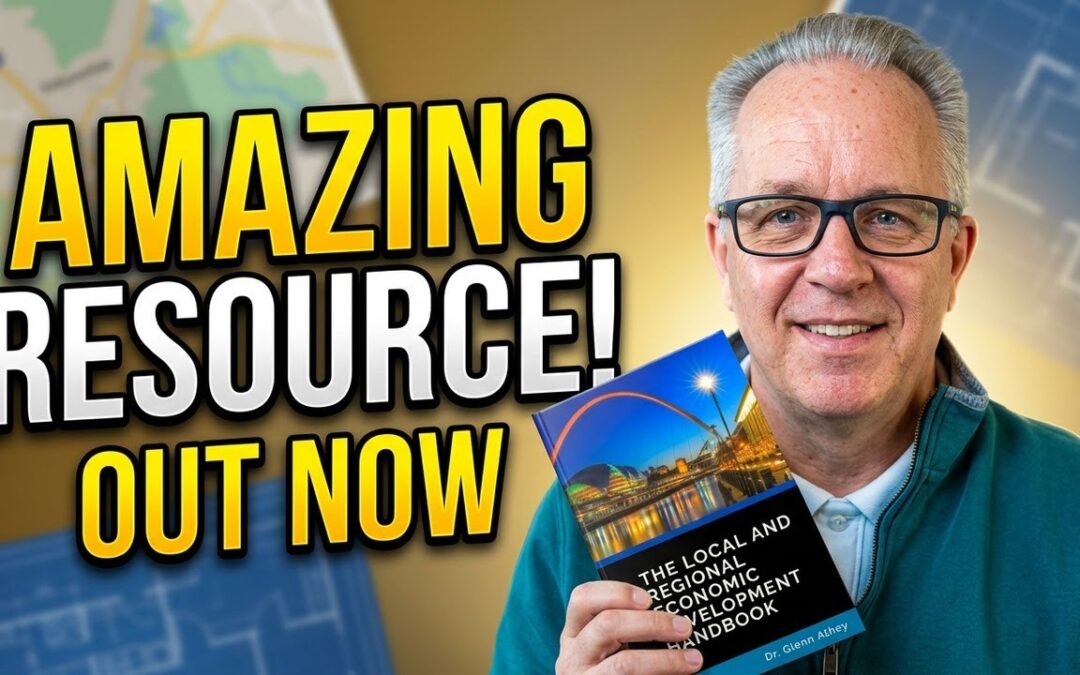
On Sale Today! The Local and Regional Economic Development Handbook
Today's the day. The Local and Regional Economic Development Handbook is now available in hardback via amazon. After two years of writing — and thirty-two years of practice behind it — the book is out! I've also recorded a ten-minute video walkthrough that takes you...

The Arithmetic of Business Survival
What Every Economic Development Practitioner Needs to Know About Business Finance Enterprise support is one of the most well-intentioned areas of economic development work — and one of the most frequently misdirected. We celebrate entrepreneurship, fund business...
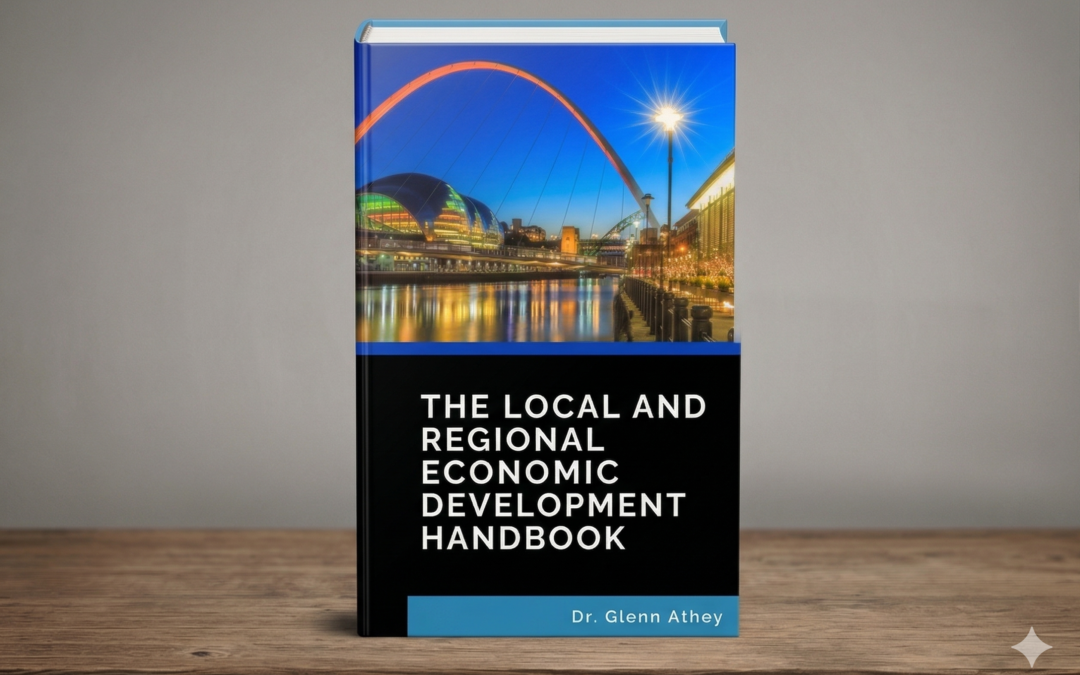
𝗠𝘆 𝗵𝗮𝗻𝗱𝗯𝗼𝗼𝗸: 𝗲𝘅𝗽𝗲𝗿𝘁𝘀 𝗮𝗻𝗱 𝗽𝗿𝗮𝗰𝘁𝗶𝘁𝗶𝗼𝗻𝗲𝗿𝘀 𝗿𝗲𝗮𝗰𝘁
I've put out some drafts of The Local and Regional Economic Development Handbook to a few colleagues and collaborators for their response, insights and hopefully some words of recommendation... WHAT PROFESSIONALS AND EXPERTS ARE SAYING ABOUT THIS BOOK: “The breadth...

𝗧𝗼𝗱𝗮𝘆’𝘀 𝘁𝗵𝗲 𝗹𝗮𝘀𝘁 𝗱𝗮𝘆 𝘁𝗼 𝗷𝗼𝗶𝗻 𝗘𝗰𝗼𝗻𝗼𝗺𝗶𝗰 𝗗𝗲𝘃𝗲𝗹𝗼𝗽𝗺𝗲𝗻𝘁 𝗪𝗼𝗿𝗹𝗱 𝗼𝗻 𝘁𝗵𝗲 𝗱𝗶𝘀𝗰𝗼𝘂𝗻𝘁 𝗙𝗼𝘂𝗻𝗱𝗲𝗿 𝗿𝗮𝘁𝗲
That's 15 hours of online courses, access to exclusive online ebook of the Local and Regional Economic Development Handbook (cost £59.99 on Amazon), 27 workbooks, and 1 to 1 time with the Founder, Glenn. Tonight at midnight the...

𝙒𝙝𝙖𝙩 𝙙𝙤𝙚𝙨 𝙖𝙣 𝙚𝙘𝙤𝙣𝙤𝙢𝙞𝙘 𝙙𝙚𝙫𝙚𝙡𝙤𝙥𝙢𝙚𝙣𝙩 𝙘𝙤𝙢𝙥𝙚𝙩𝙚𝙣𝙘𝙮 𝙛𝙧𝙖𝙢𝙚𝙬𝙤𝙧𝙠 𝙡𝙤𝙤𝙠 𝙡𝙞𝙠𝙚?
I've been working on mapping what a genuine competency framework for local and regional economic development actually looks like — and it's both broader and deeper than most people assume.Some observations from the past 20 years:𝗧𝗵𝗲 𝗲𝗰𝗼𝗻𝗼𝗺𝗶𝗰 𝗮𝗻𝗱 𝗽𝘂𝗯𝗹𝗶𝗰 𝗽𝗼𝗹𝗶𝗰𝘆...
EDW Founder Membership Open Until 20 April 2026
After 32 years working in economic development, I've noticed something. There's no real home for people doing this work in the UK. No professional community where practitioners can share what's actually working, get honest answers to difficult questions, or access...

What do 100+ Labour Market Research and Policy Reports Tell Us About AI and Occupational Change?
The Impact of AI on Occupations, Roles and Skills I've read 140 UK labour market research and policy documents over the past four months. Here's a precis of what they are saying about AI and occupational change. The Scale and Pace of Change Across all the documents...

𝗧𝗵𝗲 𝗘𝗰𝗼𝗻𝗼𝗺𝗶𝗰 𝗗𝗲𝘃𝗲𝗹𝗼𝗽𝗲𝗿’𝘀 𝗩𝗶𝗲𝘄: 𝗣𝗼𝗹𝗶𝘁𝗶𝗰𝗮𝗹 𝗣𝗿𝗼𝗻𝗼𝘂𝗻𝗰𝗲𝗺𝗲𝗻𝘁𝘀 𝗗𝗼𝗻’𝘁 𝗦𝗵𝗶𝗳𝘁 𝗠𝗮𝗿𝗸𝗲𝘁𝘀
Political pronouncements don't shift markets unless they are backed by tangible co-investment, legislation, incentives, changes to tax codes and/or demand stimulus This is the first article in a regular weekly series, where I reflect on a common issue that I see a lot...
Free Executive Track Course in February: Poverty, Inclusion and Inequality
We've just made the Executive Track course module on poverty, inclusion and inequalities free on ourCPD site - which can be accessed by joining with the free membership 𝙀𝙭𝙥𝙡𝙤𝙧𝙚𝙧 tier at https://www.economicdevelopment.world/joinThis 1 h course includes a workbook to...
Best Practice Supporting Industries and Clusters
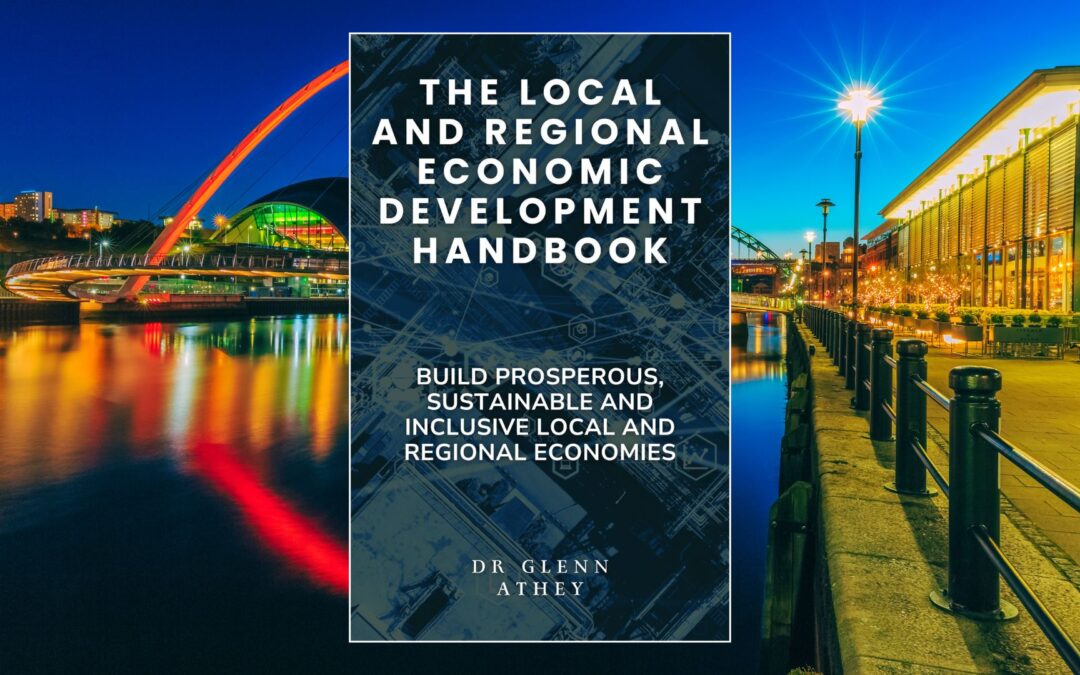
The book I'm launching next month - 𝘛𝘩𝘦 𝘓𝘰𝘤𝘢𝘭 𝘢𝘯𝘥 𝘙𝘦𝘨𝘪𝘰𝘯𝘢𝘭 𝘌𝘤𝘰𝘯𝘰𝘮𝘪𝘤 𝘋𝘦𝘷𝘦𝘭𝘰𝘱𝘮𝘦𝘯𝘵 𝘏𝘢𝘯𝘥𝘣𝘰𝘰𝘬 - is packed with practical advice and case studies. Here's a sample of what's in the book regarding industrial clusters...The UK has oscillated between active industrial strategy...