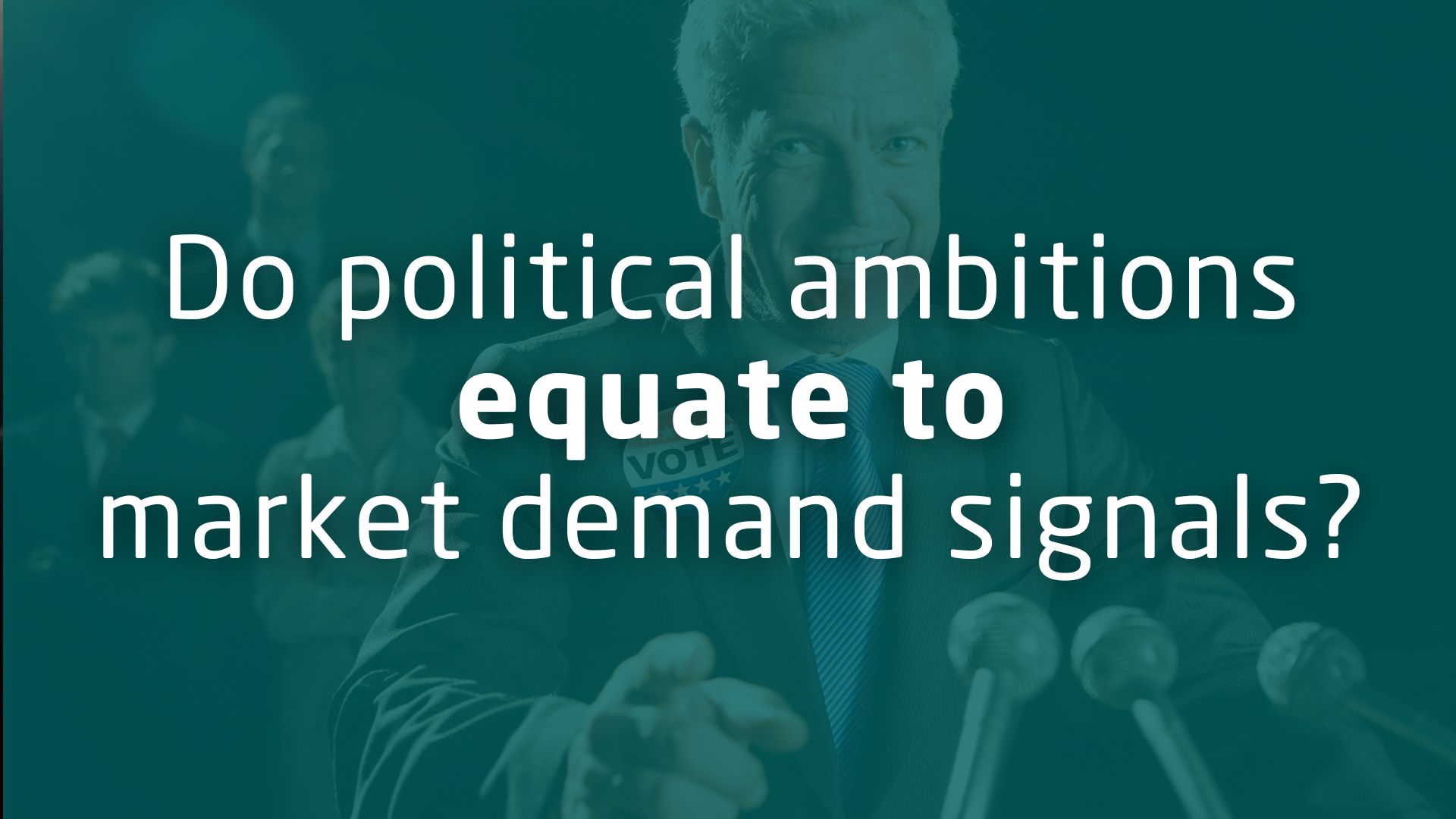

Political pronouncements don’t shift markets unless they are backed by tangible co-investment, legislation, incentives, changes to tax codes and/or demand stimulus
This is the first article in a regular weekly series, where I reflect on a common issue that I see a lot in my work as a local and regional economic development advisor and boil it down to some essential truths.
If I had a 100 quid every time someone said to me “Glenn, where are we gonna get ALL these construction workers for this massive planned development that’s GOING to happen?”
Well, I’d be certainly happy to receive the cash, but the clients don’t look happy when I tell them:
“Look, having a plan for development without any investment, permissions or land use allocations behind it, or some politician saying ‘we’re gonna build a million homes in 10 years.’ ” isn’t a solid investment pipeline, its political ambition.
Plus, the construction sector is going to look at all the workforce, plant and material requirements and say “nah, it’ll take 3x longer than you say to deliver all this.”
Investment capital is finite and is managed across a portfolio of sectors, activities and countries. If your big project is too risky or the returns are too low – investment managers will find other investments where the returns are better and the risk is lower.
In other words – political pronouncements don’t shift markets – unless they are backed by tangible co-investment, legislation, incentives, changes to tax codes, and/or demand stimulus.
That’s why I’m critical of governments and politicians who make pronouncements about “growth” without tangible policy mechanisms or actions to back it up.
To invest – investors need an investable proposition. That’s what we need to work on.
Great projects can take decades of work to come to fruition – just look at London’s Kings Cross redevelopment, or Northern Rail (which has just been green-lit after 20+ years of planning and lobbying).
It is always useful to ask whether there’s currently a commercial rationale or opportunity that matches up with, or supports the policy ambitions. If there isn’t – good to ask why, and what the options are. And it’s not always black and white – it may be an issue of timing, current ownership structures, or market immaturity, or some sunk costs (such as remediation) which need to be addressed.
𝙔𝙤𝙪 𝙘𝙖𝙣’𝙩 𝙛𝙞𝙣𝙙 𝙩𝙝𝙚 𝙧𝙞𝙜𝙝𝙩 𝙖𝙣𝙨𝙬𝙚𝙧𝙨 𝙬𝙞𝙩𝙝𝙤𝙪𝙩 𝙖𝙨𝙠𝙞𝙣𝙜 𝙩𝙝𝙚 𝙧𝙞𝙜𝙝𝙩 𝙦𝙪𝙚𝙨𝙩𝙞𝙤𝙣𝙨 𝙛𝙞𝙧𝙨𝙩, 𝙝𝙤𝙬𝙚𝙫𝙚𝙧 𝙝𝙖𝙧𝙙 𝙤𝙧 𝙥𝙤𝙡𝙞𝙩𝙞𝙘𝙖𝙡𝙡𝙮 𝙪𝙣𝙘𝙤𝙢𝙛𝙤𝙧𝙩𝙖𝙗𝙡𝙚 𝙩𝙝𝙖𝙩 𝙢𝙖𝙮 𝙗𝙚 𝙨𝙤𝙢𝙚𝙩𝙞𝙢𝙚𝙨.
Economic development is complex, eh?!
hashtag#investment hashtag#viability hashtag#ROI hashtag#local hashtag#city hashtag#region hashtag#economy