

Source: Combined Authorities (England)
Author: Rob Hakimian
Date published: 2025-11-07
[original article can be accessed via hyperlink at the end]
Liverpool City Region Mayor Steve Rotheram has extended a technical cooperation agreement with the South Korean operator of the Sihwa Lake tidal power plant as local leaders press ahead with plans for a large‑scale tidal barrage on the River Mersey.
K‑Water, which has operated Sihwa since 2011, reports annual generation at Sihwa of around 552GWh, replacing significant fossil fuel use in South Korea. It is currently the largest tidal range plant in the world – but it would be dwarfed by the 700MW Mersey Tidal, were it to be built.
A two‑year extension to a Memorandum of Agreement with K‑Water, the state water agency that built and runs the 254MW Sihwa Lake plant, was signed on Wednesday by Rotheram, Liverpool City Region Combined Authority (LCRCA) chief executive Katherine Fairclough and K‑Water executive vice‑president Jang Byeong‑hoon. The original agreement was signed in December 2022.
The collaboration is intended to provide technical insight for the Mersey Tidal Power programme, a proposed barrage that backers say could generate up to about 1GW of predictable electricity and supply hundreds of thousands of homes. The scheme’s proponents also argue it could create thousands of local jobs, strengthen UK energy security and provide long‑term flood protection for communities along the river.
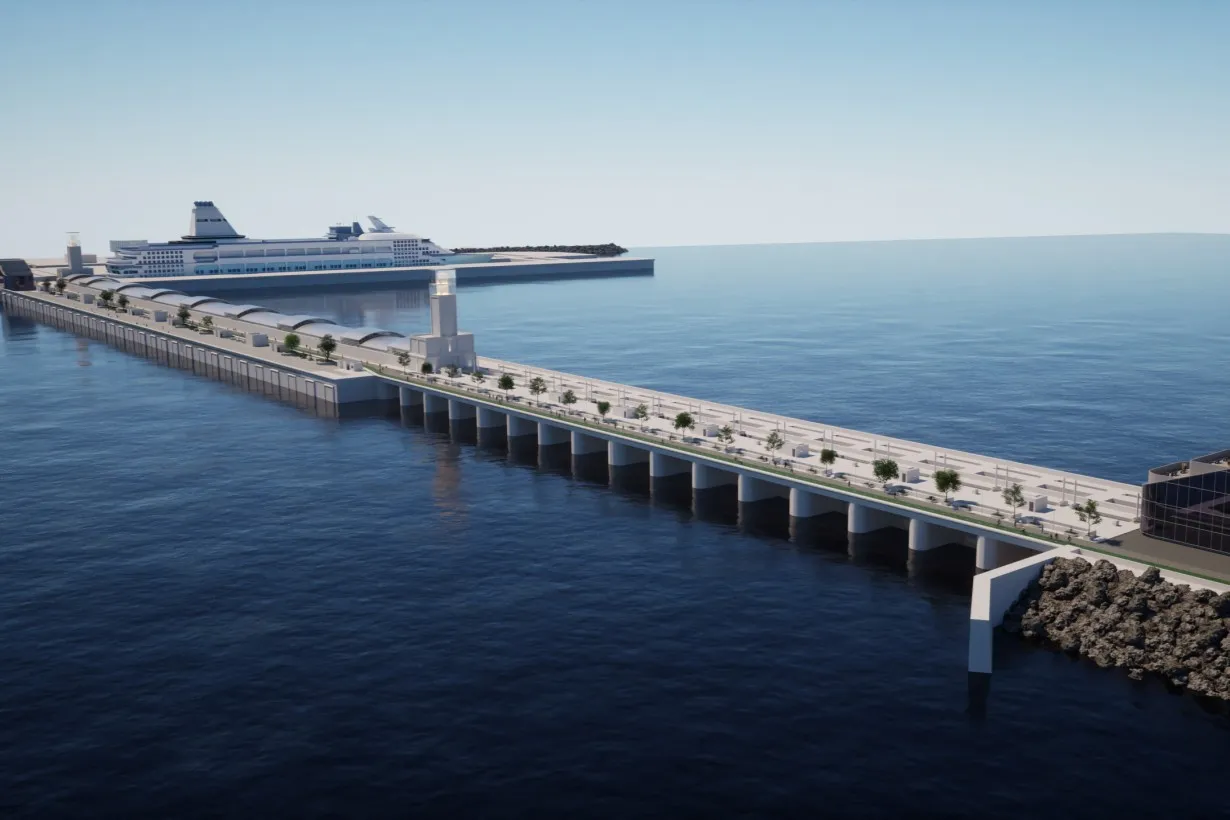
Mersey Tidal would be a barrage connecting Liverpool and the Wirral with 28 turbines to harness tidal range energy
According to the LCRCA, exchanges under the agreement have included detailed technical briefings with K‑Water and the Sihwa plant’s lead contractor, Daewoo E&C; extensive site visits including full inspection of Sihwa’s operating plant; and joint work on advanced modelling. K‑Water has used artificial intelligence‑driven models to optimise generation; Mersey Tidal’s team says it has developed a model to predict hydrodynamic changes and that the two systems are being assessed for integration.
A tidal symposium organised by the Combined Authority this week will bring delegates from South Korea and figures from the tidal range sector together to discuss technical and environmental issues. Speakers include Tilly Collins of Imperial College, whose recent research questions some common assumptions about local environmental impacts of tidal barrage projects and suggests effects can be neutral or beneficial in certain circumstances.
The Mersey Tidal proposal is at an early planning stage. Supporters point to the Mersey’s geography, a narrow entrance into a wide tidal lagoon and a large tidal range as favourable for a barrage. They say the project would use established technology and could operate for more than a century while supporting local supply chains in maritime and green energy sectors.
LCRCA’s recently published £10bn Growth Plan for 2025 to 2035 positions Mersey Tidal as a central project. It is targeting it to be “shovel ready” in 2028 and operational in 2040.
LCRCA has been strengthening ties with South Korea more widely: since 2022 it has signed a five‑year memorandum of understanding with the mayor of Busan on cooperation in areas including clean energy, and the UK and South Korea agreed a Clean Energy Partnership last year aimed at accelerating bilateral cooperation on net‑zero technologies.
Next steps for the Mersey scheme will require detailed environmental impact assessments, consenting and financing plans. It is hoped that the knowledge transfer from K‑Water’s operational experience will shorten learning curves, but experience from one estuary does not eliminate the need for site‑specific studies. Local and national authorities will need to balance potential energy and flood‑protection benefits against ecological risks as the project moves forward.
Liverpool City Region mayor Steve Rotheram said: “Building the UK’s first tidal scheme is a complex business, but our collaboration with K-Water has been a genuine partnership of shared learning and ambition. Over the past three years, we’ve benefited enormously from their world-leading expertise in tidal power – experience that has helped shape and strengthen our own plans for Mersey Tidal Power.
“The River Mersey powered the world’s first industrial revolution, and through this project it can once again drive a new, green industrial revolution – creating thousands of good jobs, boosting our energy security, and helping us reach net zero. Through our partnership with K-Water, we’re not just learning from the best in the world – we’re positioning the Liverpool City Region to lead it.”
K-water executive vice president Jang Byeong-hoon said: “K-water first established its connection with LCRCA three years ago, and today we have signed an MoA for the Mersey tidal and carbon-neutral technology cooperation here in Liverpool.
“I hope that through this event, our cooperative relationship will strengthen, ensuring the successful development of the Mersey Tidal project and advancing our efforts for carbon neutrality.”
Like what you’ve read? To receive New Civil Engineer’s daily and weekly newsletters click here.
Liverpool City Region renews collaboration with Korean tidal plant to support Mersey Tidal