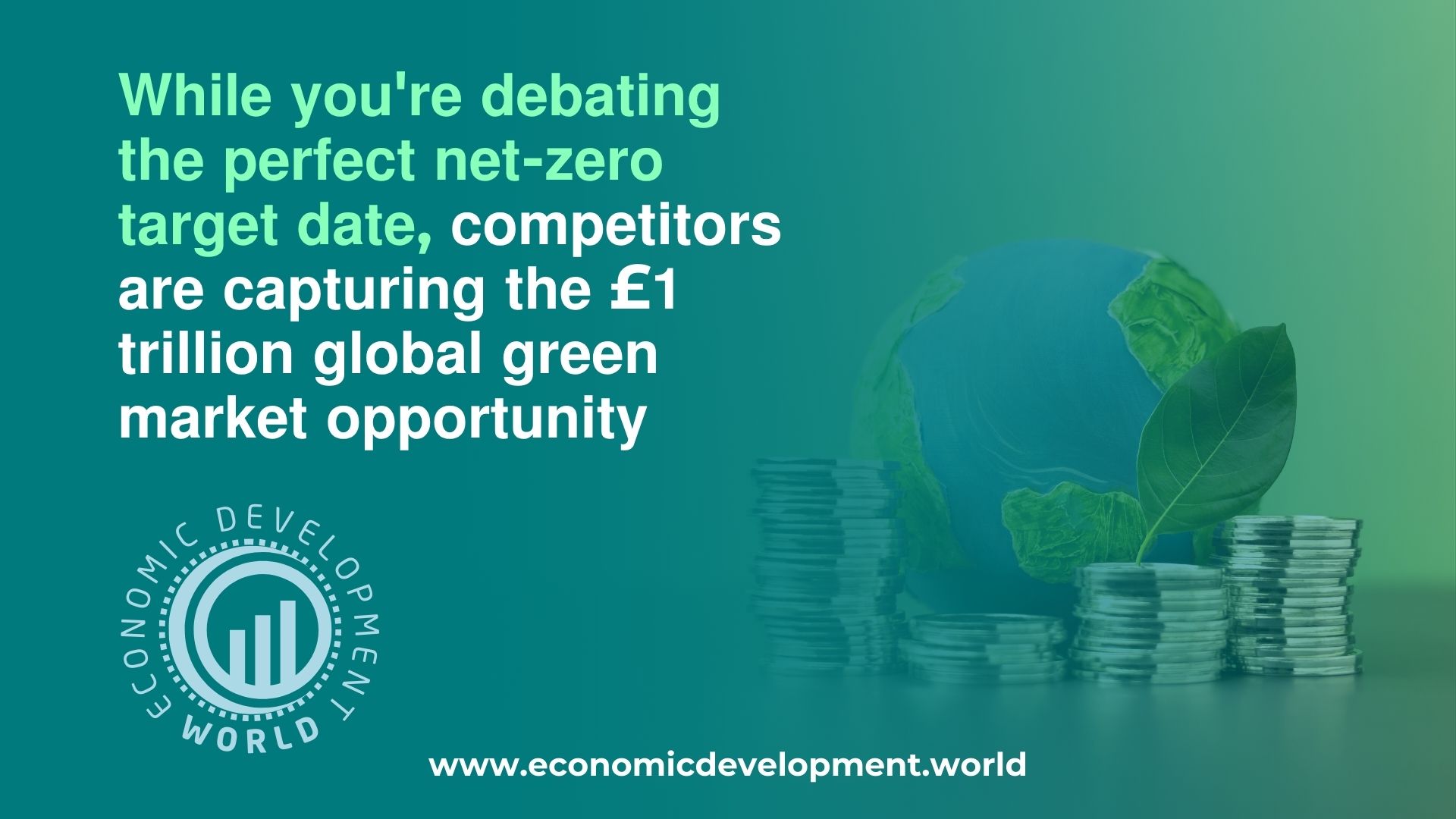

Let’s get beyond the vague net zero target year, because the risk of not meeting it is realy with only partial commitments and actions to date.
❌ Most economic development agencies are still promoting investments that won’t survive the next decade
❌ They’re missing the window for market leadership in sectors already creating 840,000 UK jobs at £42,600 average wages
❌ They’re treating sustainability as a nice-to-have rather than basic economic competence
Here are 3 things you can implement immediately:
**𝟭. 𝗔𝘂𝗱𝗶𝘁 𝘆𝗼𝘂𝗿 𝗰𝘂𝗿𝗿𝗲𝗻𝘁 𝗶𝗻𝘃𝗲𝘀𝘁𝗺𝗲𝗻𝘁 𝗽𝗼𝗿𝘁𝗳𝗼𝗹𝗶𝗼**
Stop promoting energy-intensive businesses without transition plans. Germany’s official projections show they’re missing 2030 targets because they kept backing yesterday’s industries. Don’t make their mistake.
**𝟮. 𝗟𝗲𝗮𝗱 𝘄𝗶𝘁𝗵 𝗴𝗿𝗶𝗱-𝗿𝗲𝗮𝗱𝘆 𝘀𝗶𝘁𝗲𝘀**
If your key employment sites can’t connect to renewable energy infrastructure, you’re promoting stranded assets. Netherlands’ renewable energy lag is precisely because they maintained fossil fuel tax advantages while competitors moved ahead.
**𝟯. 𝗦𝗸𝗶𝗹𝗹𝘀-𝗳𝗶𝗿𝘀𝘁 𝗮𝗽𝗽𝗿𝗼𝗮𝗰𝗵 𝘁𝗼 𝗴𝗿𝗲𝗲𝗻 𝘀𝗲𝗰𝘁𝗼𝗿𝘀**
Scotland’s Climate Emergency Skills Action Plan isn’t perfect, but it identified something crucial: you need sector-specific workforce development NOW, not when the jobs arrive. France created 90,000 industrial jobs between 2017-2023 because they planned for it.
The economic data is clear: climate inaction will cost 16-22% of Global GDP by 2100. If we act now, climate action will cost a maximum of 2% of GDP with net benefits of 4% GDP.
Your region either becomes a green economy leader or watches opportunities relocate to places that already are.
This article is based on the CPD, training and skills development materials and courses for Local and Regional Economic Development at http://www.economicdevelopment.world/about
#EconomicDevelopment #NetZero #GreenJobs #ClimateAction #SustainableDevelopment #FutureEconomy