

Source: Combined Authorities (England)
Author: Bob Wright
Date published: 2025-08-29
[original article can be accessed via hyperlink at the end]
On 8 July, the Department for Transport (DfT) announced the go-ahead for over 50 road and rail upgrades across the UK, including five strategic road schemes and five key rail upgrades.
Backed by over £92 billion from the Spending Review settlement, the review sets out what the government says is the biggest boost to England’s transport infrastructure in a generation as well as unlocking schemes that deliver for the taxpayer and drive growth.
The batch of projects, which aims to ease congestion, cut journey times, and bring greater access to jobs and opportunities, will, says the government, support 42,000 jobs and pave the way for 1.5 million new homes as part of the Plan for Change. The rail enhancements will connect thousands more people to the rail network.
The rail projects announced include £10.2 billion of rail investment, all outside of London and the South East. These include:
- Reinstating passenger services between Bristol city centre and Portishead.
- Delivering three new stations, bringing thousands more people closer to a railway.
- Funding the Midlands Rail Hub, creating new rail links for more than 50 locations.
Transport Secretary Heidi Alexander said: “Transport is the backbone of our economy, which is why we are giving them the record funding boost they need, putting taxpayers’ money where it matters most and making everyday journeys easier.”
Portishead and Bristol
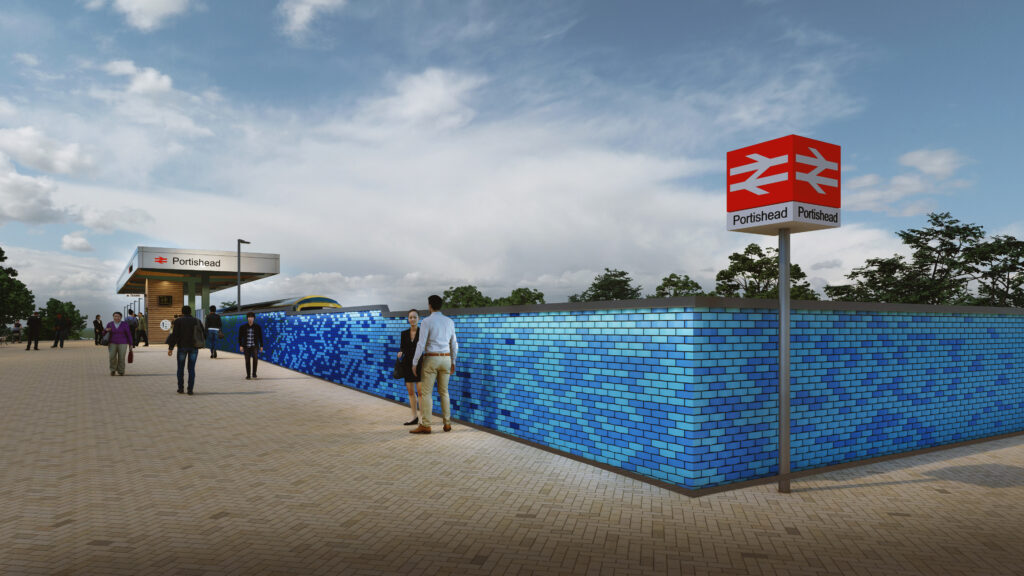
The West of England Combined Authority and North-East Somerset Council’s plan to reinstate passenger rail services on the disused line between Portishead, Pill, and Bristol Temple Meads received a government pledge for a further £27.6 million towards the £182.21million scheme, bringing a total government contribution to more than £47 million.
The new hourly services will connect an additional 50,000 people to the rail network and support a significant new housing development. The line, which was closed to passengers in 1964, is seen as a critical way to ease traffic congestion and support economic growth in one of North Somerset’s fastest-growing towns. The new service is expected to significantly reduce commuting times between Portishead and Bristol city centre.
Stations reopening
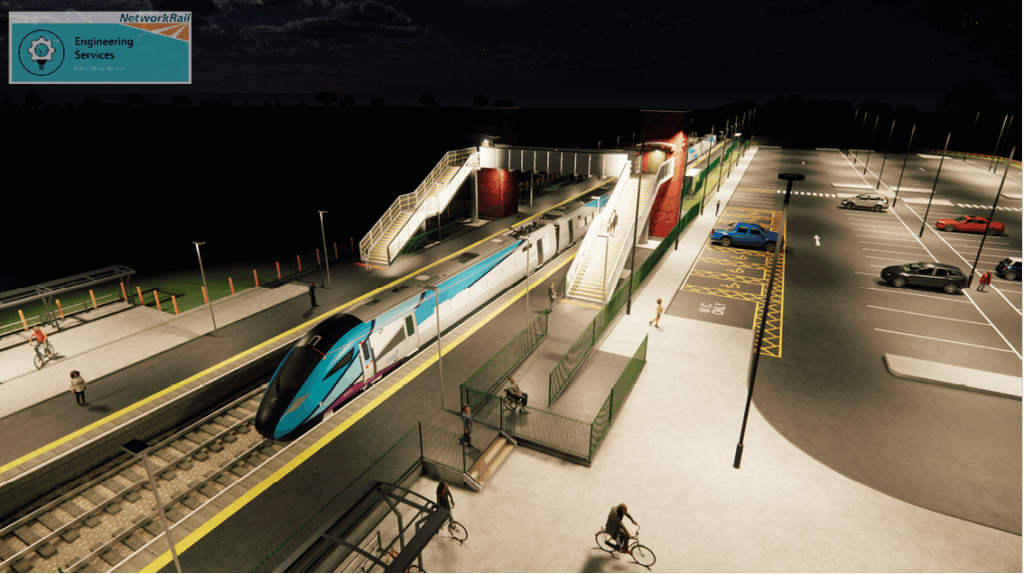
Three new stations announced in the statement will provide full step-free access throughout, fully accessible footbridges with lifts and steps connecting platforms, bike shelters, and car parks (including EV charging), with taxi and bus stops.
Two new stations have been approved between Taunton and Exeter. Following long local campaigns, these will be constructed at Wellington and Cullompton, whose original stations both closed in 1964. These will support significant expansion plans for the towns and the new stations and services will be critical to allowing local people to access jobs at major employment centres such as Exeter.
Wellington is a growing town, which has had around 2,000 new homes built in the last few years and has a projected increase in housing numbers with about 6,000 more residents. Without the new station, that growth would not be deliverable. Shared use paths will link the station to the town centre.
The new Cullompton station will be built next to the motorway services at Junction 28 of the M5. Campaigners say that this will be key to unlocking the building of 5,000 homes nearby in the Culm Garden Village development.
A new station at Haxby, located five miles north of York, will be used by York to Scarborough services and be the town’s first rail connection since the original station closed in 1930. The 20,000 residents within 2.4km of the new station will no longer have to rely on roads to travel to economic centres such as York and Leeds and the station could support prospective developments for 3,155 homes. Shared-use paths will connect the station to residential areas of Haxby. The £24 million project is being progressed jointly by Network Rail and City of York Council. It is planned to be operational by 2028.
Midlands Rail Hub
The Midlands is set to see a huge improvement to its rail services. The new Midlands Rail Hub will be the region’s biggest and most ambitious rail improvement scheme to date. Significant government funding will mean huge numbers of additional trains and extra seats can be added to the rail network in and out of Birmingham every day. This will support new homes and create greener growth across the Midlands while providing faster, more frequent rail links for more than 50 locations and creating almost 13,000 construction jobs.
Birmingham is one of the most complex and congested parts of the British rail network. Currently, the railway through central Birmingham is not equipped to meet the passenger demands of the future. Midlands Rail Hub plans to increase capacity at Birmingham Moor Street station, next to the new HS2 station at Curzon Street. It also aims to ease congestion on key rail routes from central Birmingham.
The scheme will add up to 300 additional trains on the rail network per day in and out of Birmingham, up to 20 million extra seats for passengers each year. It will provide faster, more frequent or new rail links to over 50 locations including, Nottingham, Leicester, Bromsgrove, Nuneaton, Worcester, Hereford, and Cardiff.
The project will build two chords at Bordesley, just east of Birmingham city centre, as well as engineering interventions throughout the region:
The West Chord consists of improvements between Bordesley and Moor Street, allowing access to Birmingham Moor Street from South-West and Wales, allowing additional trains towards Worcester, Hereford, Bristol, and Cardiff.
The East Chord will create an access from the East Midlands, allowing direct access for trains from cities such as Leicester, Derby, and Nottingham.
ECML digital signalling
The East Coast Mainline (ECML) is already benefiting from an increase to capacity and frequency. Network Rail will continue to upgrade this to digital signalling. This landmark programme will set the blueprint for signalling improvements across the country, providing a safer, more reliable, and better performing ECML. It will provide real time information and has the potential to reduce delays by one third, while also creating 4,800 new roles across the rail supply chain and establishing the development of digital skills across the rail sector. In-cab technology using European Train Control Signalling (ETCS) is the future of the railway, and the East Coast Digital Programme will deliver a more reliable and greener railway for passengers in the long term.
The bad news
It was not all good news for rail investment, with four major rail projects put on hiatus. Most controversially, the third phase of electrification of the Midland Main Line has been paused. This will delay the introduction of faster rail services to Sheffield, and Nottingham, as well as risking the continuity of the electrification supply chain. As a result, Sheffield will remain the only major UK city without electrified rail services.
The York Area Capacity and Performance project has also been paused. The DfT said this was ‘until the wider strategy for the ECML – aligned with the Northern Powerhouse Rail aspiration’ – can be further developed.
The final phase of the South West Rail Resilience Programme has been placed on hold although advance works to support cliff monitoring and drainage near Dawlish are in hand. Also affected is the congestion relief scheme at Peckham Rye station which has been paused for the current Spending Review period. This is the largest interchange station without step free access to platforms which, as a result, leads to overcrowding at peaks.
There was also no mention of the Ely area capacity enhancement scheme which would significantly increase intermodal freight train movements from Felixstowe as well as passenger trains through the station. Network Rail had submitted a business case for this project to the DfT in 2022.
Image credit: Network Rail
The post Key rail upgrades announced by DfT appeared first on Rail Engineer.